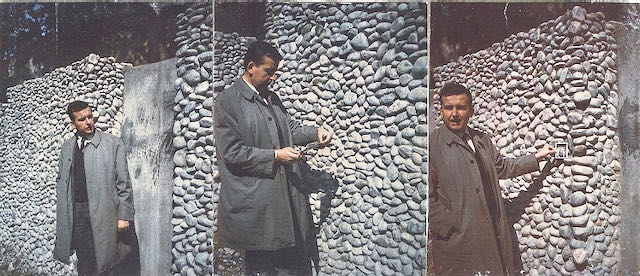
To mark the centenary of Michel Marot’s birth (1926–2021), Villa Arson pays tribute to the architect who designed the site, highlighting the originality and significance of his work. Designed as a place for living, creation, and transmission, the Villa embodies a vision of architecture that is both modern and deeply humanist, where space is shaped in the service of use, encounters and experiences.
Born in Troyes on January 29, 1926, Michel Marot graduated from the École Nationale Supérieure des Beaux-Arts in 1950. The following year, thanks to a Fulbright scholarship, he attended the City Planning studio at Harvard University (United States). There, he discovered the work of Walter Gropius and Ludwig Mies van der Rohe, as well as those of Eero Saarinen, Louis Kahn and Frank Lloyd Wright. Upon his return to France in 1954, he won the Prix de Rome for the program titled “An African Research Center in Kano, British Nigeria.” He was a resident at the Villa Medici from January 1955 to April 1958. In 1956, he designed the Sainte-Agnès Church in Fontaine-les-Grès, for which he received the Équerre d’Argent in 1963.
In 1959, he founded the MTA architectural firm with his partner Daniel Tremblot. They were later joined by Jean-Louis Nouvian, Didier Quillard, Maurice Guerlain, Pierre Blain and Georges Fidon, who played a significant role in the design of Villa Arson.
Appointed Chief Architect of Civilian Buildings and National Palaces (Architecte en Chef des Bâtiments Civils et Palais Nationaux) in 1960, Michel Marot was placed in charge of the Alpes-Maritimes and Corsica. Later, in this capacity, he was also in charge of the Arc de Triomphe and the National Archives.
In 1964, Max Querrien, Director of Architecture at the Ministry of Cultural Affairs (1963–1968), entrusted him with the design of the Villa Arson. Inaugurated in 1972, it became one of Michel Marot’s major works.
The Villa Arson stands as a space of crystallization, resonating with the encounters and inspirations drawn from the experiences that shaped his formation as an architect.
As an institution of a new kind, it represents one of the last major achievements of the cultural decentralization policy promoted by André Malraux. Bringing together on a single site an art school, an exhibition center dedicated to experimentation, and international residencies, this new “artistic campus” was intended to rival the major Parisian art schools.
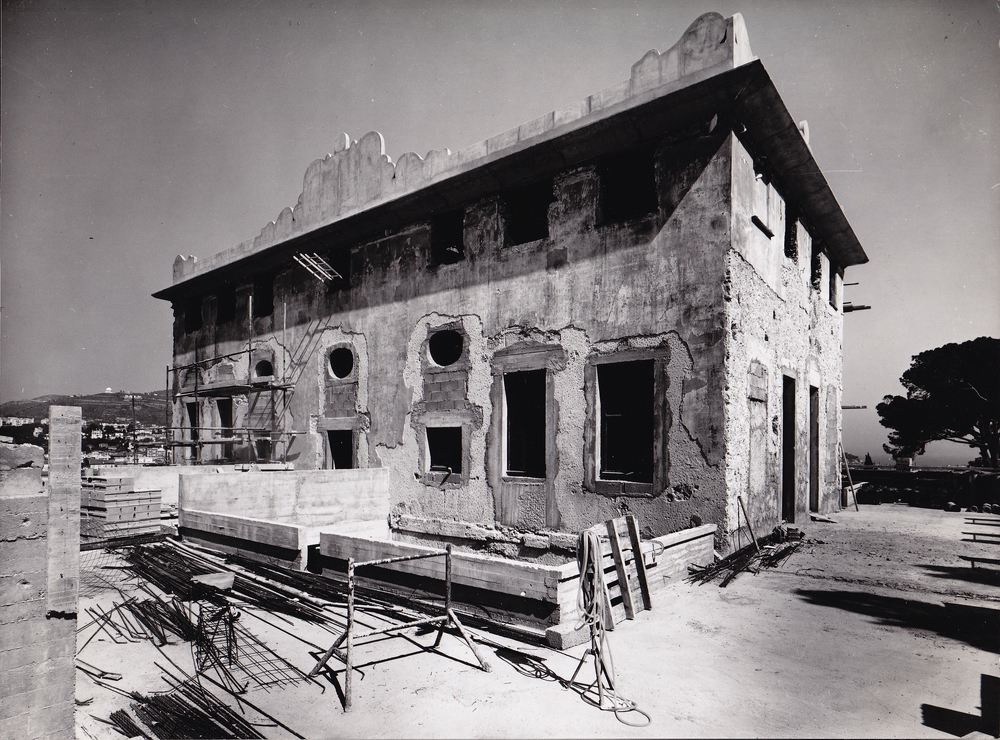
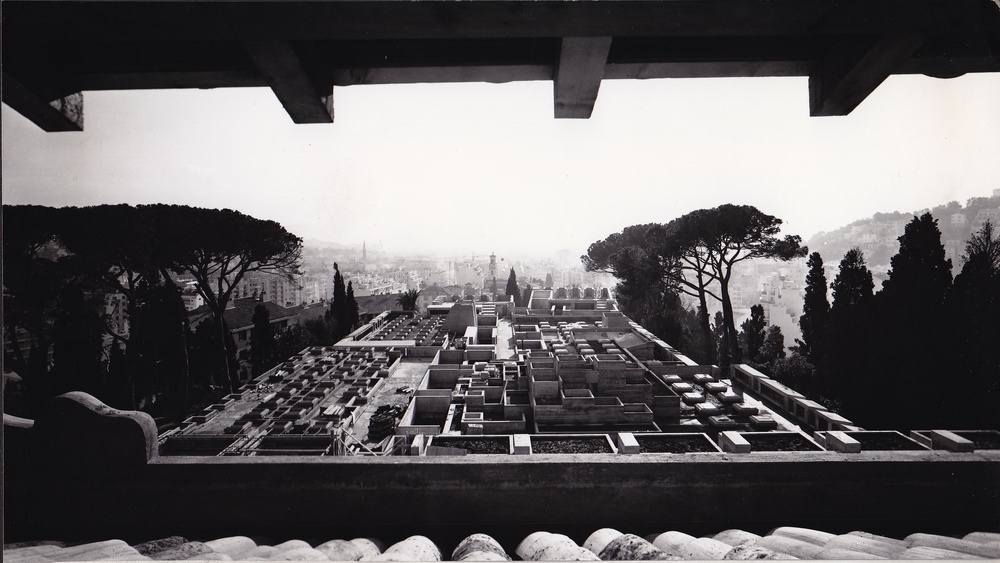
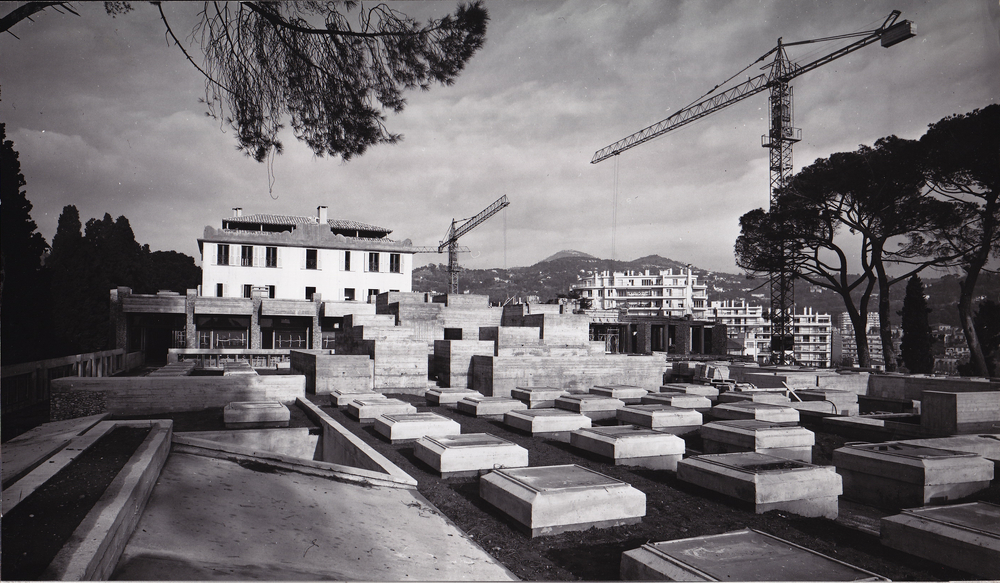
To meet the requirements of Villa Arson’s ambitious construction brief, Michel Marot developed a design that spans almost the entire site. The modern concrete buildings, clad in pebbles, are embedded within a perimeter defined by mature trees (umbrella pines and cypresses) planted during the Arson family era. The historic building is enclosed within tiered terraces—echoing the principle of the former estate’s Italian-style gardens—that lead down to two outdoor auditoriums facing the sea. Evoking Mediterranean hilltop villages, the architecture plays with light, blurs the boundaries between indoors and outdoors, creates a dialogue between the mineral and the vegetal, and connects the studios and classrooms through a labyrinthine pathway.
Always responding generously to requests from the Villa Arson staff, he remained attentive to the developments of his building, maintaining a close and lasting relationship with it.
Today, Villa Arson is listed as a Historic Monument and has been awarded the Remarkable Contemporary Architecture label.